
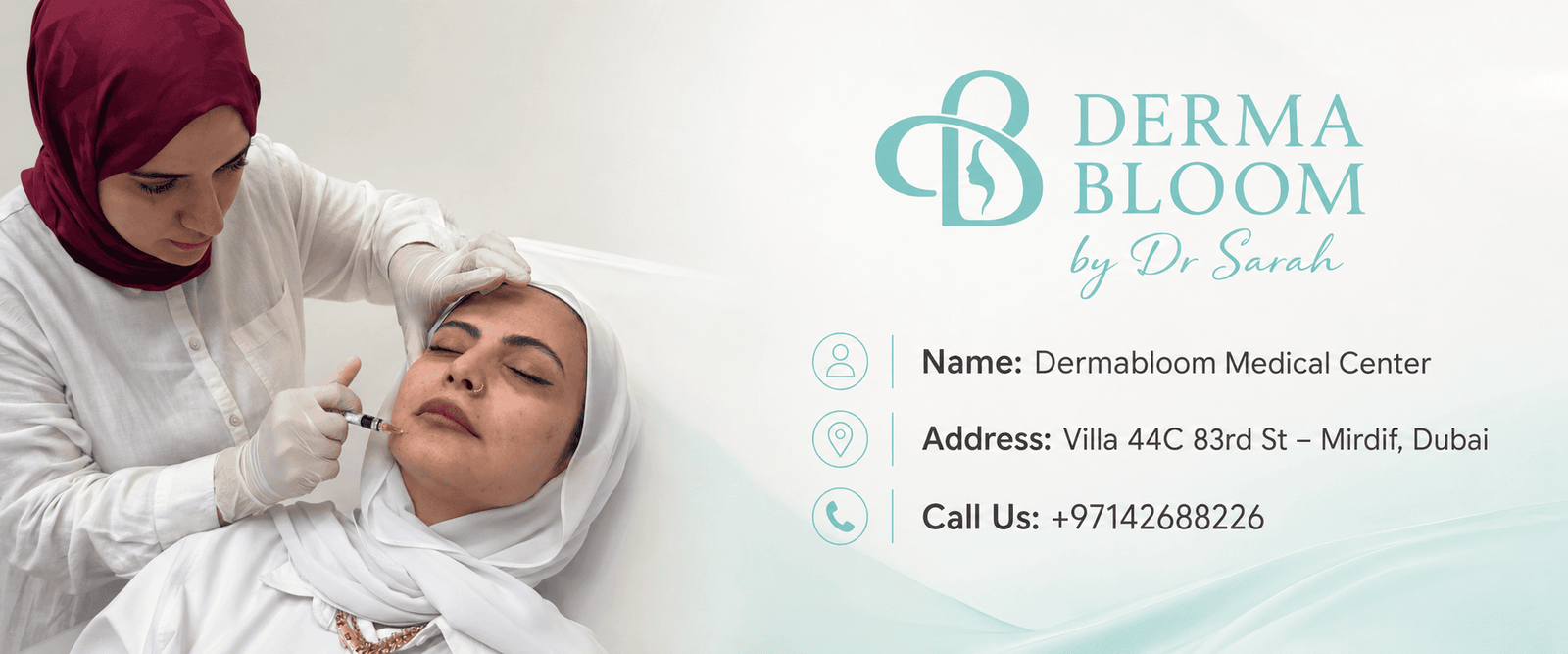
Vampire Facial or PRP Facial in Dubai: Is There a Difference?
A vampire facial and a PRP facial often describe the same broad treatment: a practitioner processes a small sample of your blood and uses platelet-rich plasma on your face. However, clinics do not use these terms consistently.
In many clinics, a vampire facial combines microneedling with topical PRP. In contrast, a PRP facial may involve microneedling, direct PRP injections or both.
Therefore, the treatment name alone does not tell you exactly what the practitioner will do. Before you proceed, ask whether the procedure includes microneedling, injections or a combination of techniques.
Vampire Facial vs PRP Facial: A Quick Comparison
| Feature | Vampire facial | PRP facial |
|---|---|---|
| Meaning | An informal or marketing name | A broader clinical description |
| Common technique | Microneedling followed by PRP application | Microneedling, PRP injections or both |
| Blood collection | Yes | Yes |
| Main concerns | Texture, fine lines, dullness and some acne scars | Depends on the application technique |
| Downtime | Often a few days | Varies between topical and injected treatment |
| Standard definition | No universally accepted definition | No single standardized protocol |
In short, the terms may overlap. However, the method matters more than the name.
What Is PRP?
PRP stands for platelet-rich plasma. First, a healthcare professional draws a small amount of blood from your arm. Next, the practitioner processes the blood in a centrifuge to separate its components. This process creates plasma with a higher concentration of platelets.
Platelets contain proteins that support normal tissue repair and cell signalling. Therefore, practitioners use PRP in several medical and aesthetic procedures.
Because the treatment uses your own blood, PRP does not act like a dermal filler. It does not add immediate facial volume or change facial structure.
What Is a Vampire Facial?
“Vampire facial” is a popular name rather than a precise medical definition. Most commonly, the procedure combines microneedling with PRP.
During microneedling, a device creates controlled microchannels in the skin. Afterward, the practitioner applies PRP to the treated area or uses another clinician-selected method.
However, some providers also inject PRP during a treatment they call a vampire facial. As a result, patients should ask for a step-by-step explanation before consenting.
What Is a PRP Facial?
A PRP facial is an umbrella term for facial treatment with platelet-rich plasma. Depending on the treatment plan, the practitioner may:
- Apply PRP during or after microneedling
- Inject small amounts of PRP into selected facial areas
- Combine topical application with injections
- Treat the entire face or focus on specific concerns
Therefore, two clinics may advertise a “PRP facial” while offering different procedures.
Is One Treatment Better Than the Other?
Neither name guarantees a better treatment. Instead, the practitioner should select a technique that suits your skin, concerns and medical history.
For example, microneedling may suit some patients who want to address uneven texture or the appearance of acne scars. Meanwhile, a practitioner may use PRP injections when the treatment plan targets selected areas.
However, clinical research has not established one universally superior PRP facial protocol. A 2025 systematic review found possible improvements in wrinkles, skin texture, luminosity and hydration. Nevertheless, researchers also found substantial differences in application methods and doses. They concluded that further studies must identify the most appropriate administration method. Read the systematic review on PubMed.
What Concerns May PRP Facial Treatment Address?
After an assessment, a practitioner may consider PRP facial treatment for:
- Dull-looking skin
- Uneven skin texture
- Early fine lines
- Mild photoaging
- Some types of acne scars
- General skin-quality concerns
However, PRP will not produce the same result as surgery, dermal filler, laser resurfacing or every other injectable treatment. Moreover, it cannot stop natural skin ageing.
A consultation should compare PRP with suitable alternatives before you decide.
Who May Be Suitable for a PRP Facial?
PRP facial treatment may suit adults who:
- Have realistic expectations
- Want gradual rather than immediate changes
- Can safely undergo blood collection
- Have no active infection in the treatment area
- Understand the possible risks and limitations
- Can follow the recommended aftercare
However, suitability depends on more than age or skin concern. Your practitioner must also review your health, medicines, skin type and previous treatment history.
What Happens During the Consultation?
A proper consultation should occur before treatment. During this appointment, the practitioner should:
- Ask about your main skin concerns and desired outcome
- Examine your skin and treatment areas
- Review previous aesthetic procedures
- Ask about medical conditions and current medicines
- Discuss cold sores, allergies and abnormal scarring
- Review pregnancy or breastfeeding status
- Explain whether the procedure uses microneedling, injections or both
- Discuss expected results, risks, alternatives and aftercare
- Take standardized photographs with your consent
- Create an individualized treatment plan
In addition, tell the practitioner if you use anticoagulants, antiplatelet medicines, acne medicines or supplements that may affect bleeding. Never stop prescribed medicine unless the clinician who prescribed it approves the change.
How Does the Procedure Work?
The exact steps depend on the selected technique. However, a typical appointment may include the following stages.
1. Skin preparation
First, the practitioner cleanses the face and removes makeup. The clinic may also use a topical anaesthetic when appropriate.
2. Blood collection
Next, a healthcare professional draws a small amount of blood from your arm using sterile equipment.
3. PRP preparation
The practitioner then processes the blood in a centrifuge. This step separates the platelet-containing plasma from other blood components.
4. Microneedling or injections
After preparation, the practitioner performs the planned treatment. For example, the procedure may involve microneedling with PRP application, direct injections or both.
5. Aftercare
Finally, the practitioner checks your skin and explains how to care for it during recovery.
How Long Does a PRP Facial Take?
A PRP facial commonly takes approximately 45–75 minutes. However, the appointment may take longer when the plan includes numbing time, several treatment areas or both microneedling and injections.
The initial consultation requires additional time. Therefore, ask the clinic for the expected duration of your specific appointment.
How Many Sessions Will You Need?
No universal schedule works for every patient. However, practitioners often recommend an initial course of approximately three sessions, with several weeks between appointments.
Some patients may need fewer or more sessions. In addition, the practitioner may suggest maintenance treatment after reviewing the result.
Research protocols vary considerably. For example, one clinical study used six sessions at two-week intervals, while other studies used fewer treatments. Therefore, a responsible clinic should not promise that every patient needs the same number of sessions.
When Will You See Results?
PRP does not create an instant transformation. Instead, any changes generally develop gradually over several weeks or months.
You may notice:
- A temporary post-treatment glow
- Gradual changes in texture
- A softer appearance of some fine lines
- Improvement in selected scars
- Changes in general skin quality
However, results vary between patients. Furthermore, lighting, hydration and camera settings can make informal photographs misleading. Standardized clinical photographs provide a more reliable comparison.
What Are the Realistic Limitations?
A PRP facial cannot:
- Guarantee smoother or younger-looking skin
- Replace a surgical facelift
- Reproduce the volumizing effect of dermal filler
- Remove deep scars in one session
- Erase all wrinkles or pigmentation
- Stop the natural ageing process
- Produce identical results for every patient
In addition, researchers have not established a single best method for preparing or applying facial PRP. Therefore, clinics should explain their protocol without claiming that it guarantees superior results.
Recovery and Aftercare
Recovery depends on whether the practitioner uses microneedling, injections or both. Generally, patients may experience redness, warmth, tightness or mild swelling during the first few days.
You may also notice:
- Pinpoint bleeding
- Mild bruising
- Dryness or flaking
- Temporary sensitivity
- Small injection marks
- Mild tenderness
During recovery, follow the clinic’s specific instructions. In addition, your practitioner may ask you to:
- Avoid touching or rubbing your face
- Use a gentle cleanser
- Apply suitable sun protection
- Avoid strenuous exercise and excessive heat temporarily
- Delay makeup for the recommended period
- Avoid retinoids, exfoliating acids and harsh skincare temporarily
- Avoid swimming until the skin barrier recovers
However, aftercare varies according to treatment depth and technique. Therefore, follow your practitioner’s instructions rather than a generic online routine.
Risks and Possible Side Effects
Common short-term effects may include:
- Redness
- Swelling
- Tightness
- Tenderness
- Dryness
- Peeling
- Pinpoint bleeding
- Bruising
Less common complications may include:
- Infection
- Prolonged inflammation
- Acne flare
- Cold-sore reactivation
- Post-inflammatory hyperpigmentation
- Hypopigmentation
- Scarring
- Persistent swelling
- An unsatisfactory cosmetic result
- A reaction to antiseptic or local anaesthetic
The FDA also notes that microneedling can cause pigmentation changes, infection and herpes reactivation. Moreover, it states that authorized microneedling devices have not received approval specifically to deliver blood products such as PRP into the skin. Read the FDA’s microneedling safety information.
Why Infection Control Matters
A PRP facial involves blood and needles. Therefore, the clinic must follow strict infection-control procedures.
The practitioner should use:
- A new sterile needle and syringe
- A new microneedling cartridge for every patient and session
- Properly labelled blood tubes
- Approved PRP preparation equipment
- Aseptic handling methods
- Safe sharps and medical-waste disposal
A 2024 CDC investigation linked likely HIV transmission to PRP microneedling procedures at an unlicensed spa that used unsafe infection-control practices. Importantly, this event resulted from poor practice rather than PRP itself. Nevertheless, it demonstrates why patients should choose a licensed medical facility that follows strict blood-handling and injection protocols. Read the CDC investigation.
Who Should Avoid or Postpone Treatment?
A practitioner may advise you to avoid or postpone treatment if you have:
- An active bacterial, viral or fungal skin infection
- Active cold sores
- Open wounds or a facial rash
- An uncontrolled inflammatory skin condition
- A bleeding or clotting disorder
- Low platelet levels or another relevant blood disorder
- Significant anemia
- Uncontrolled diabetes
- A weakened immune system
- A history of keloid scarring
- A recent sunburn or planned intense sun exposure
- Current cancer treatment
- Pregnancy or breastfeeding
- Current or recent isotretinoin use
- An allergy to a planned anaesthetic or antiseptic
- A medicine that increases bleeding risk
However, this list cannot replace a medical assessment. In particular, do not stop anticoagulants, aspirin or any prescribed medicine without guidance from the prescribing clinician.
Common Patient Questions
Are a vampire facial and a PRP facial exactly the same?
Sometimes. Many clinics use the terms interchangeably. However, a vampire facial often refers to microneedling with PRP, while a PRP facial may also include direct injections. Therefore, ask the clinic to explain the technique.
Does the practitioner leave blood on my face?
The practitioner should use processed platelet-rich plasma rather than applying untreated whole blood. However, the appearance of the treatment can vary. Ask how the clinic prepares and applies the PRP.
Does a PRP facial hurt?
You may feel pressure, scratching, stinging or brief discomfort. However, the intensity depends on the microneedling depth, injection technique and your individual sensitivity. The practitioner may use topical anaesthetic when appropriate.
Will one session produce visible results?
One session may produce subtle changes, but many treatment plans include a course of sessions. Nevertheless, the practitioner should reassess your skin before recommending further treatment.
Can PRP replace dermal filler?
No. PRP aims to support skin-quality changes, while dermal filler adds volume or structure. Therefore, the treatments serve different purposes.
Is a vampire facial suitable for darker skin tones?
It may suit some patients with darker skin. However, microneedling can cause post-inflammatory pigmentation changes. Consequently, the practitioner should assess your skin type, pigment history and treatment settings carefully.
Can I have a PRP facial before an event?
Avoid scheduling your first session immediately before an important event. Redness, swelling, bruising or flaking may remain visible for several days. Instead, allow enough recovery time.
Can PRP transmit an infection?
PRP comes from your own blood. However, unsafe blood handling, reused equipment or poor infection control can transmit infection. Therefore, choose a licensed medical facility that uses sterile, single-use needles and microneedling cartridges.
Choosing Between a Vampire Facial and a PRP Facial in Dubai
Do not choose treatment based only on the name. Instead, ask the clinic:
- Will you use microneedling, injections or both?
- Who will perform the procedure?
- What training and licence does the practitioner hold?
- Will you open a new microneedling cartridge for my session?
- How will you prepare and label my PRP?
- How many sessions might I need?
- What results can I realistically expect?
- What are the alternatives?
- What should I do if I develop a complication?
Ultimately, the safest choice starts with an accurate assessment, clear consent and a treatment plan that matches your skin.
Contact Best PRP Dubai
To discuss whether a vampire facial or PRP facial may suit your concerns, arrange a consultation with a qualified practitioner.
Clinic: Best PRP Dubai
Practitioner: Dr. Sarah Magdy
Telephone: +971 4 268 8226
WhatsApp: +971 56 598 6039
Email: info@dermabloom.ae
Address: Villa 44C, 83rd Street, Mirdif, Dubai, United Arab Emirates
Website: https://bestprpdubai.com/